Lit Booster
Designing reliable AI output for teachers and struggling readers
Context
Lit Booster came out of Render, CZI Education's AI innovation studio, and was built to help teachers close post-pandemic reading gaps.
Problem
Post-pandemic literacy gaps were real and severe. Teachers knew which interventions to use but had no way to make the materials to run them. A passage for a 5th grader reading at a 2nd grade level, about Minecraft or Taylor Swift, doesn't exist off the shelf.
We bet AI could generate it, which immediately created a harder problem.
How do you design a reliable UI on a non-deterministic system, with outputs accurate enough for a struggling reader?
Approach
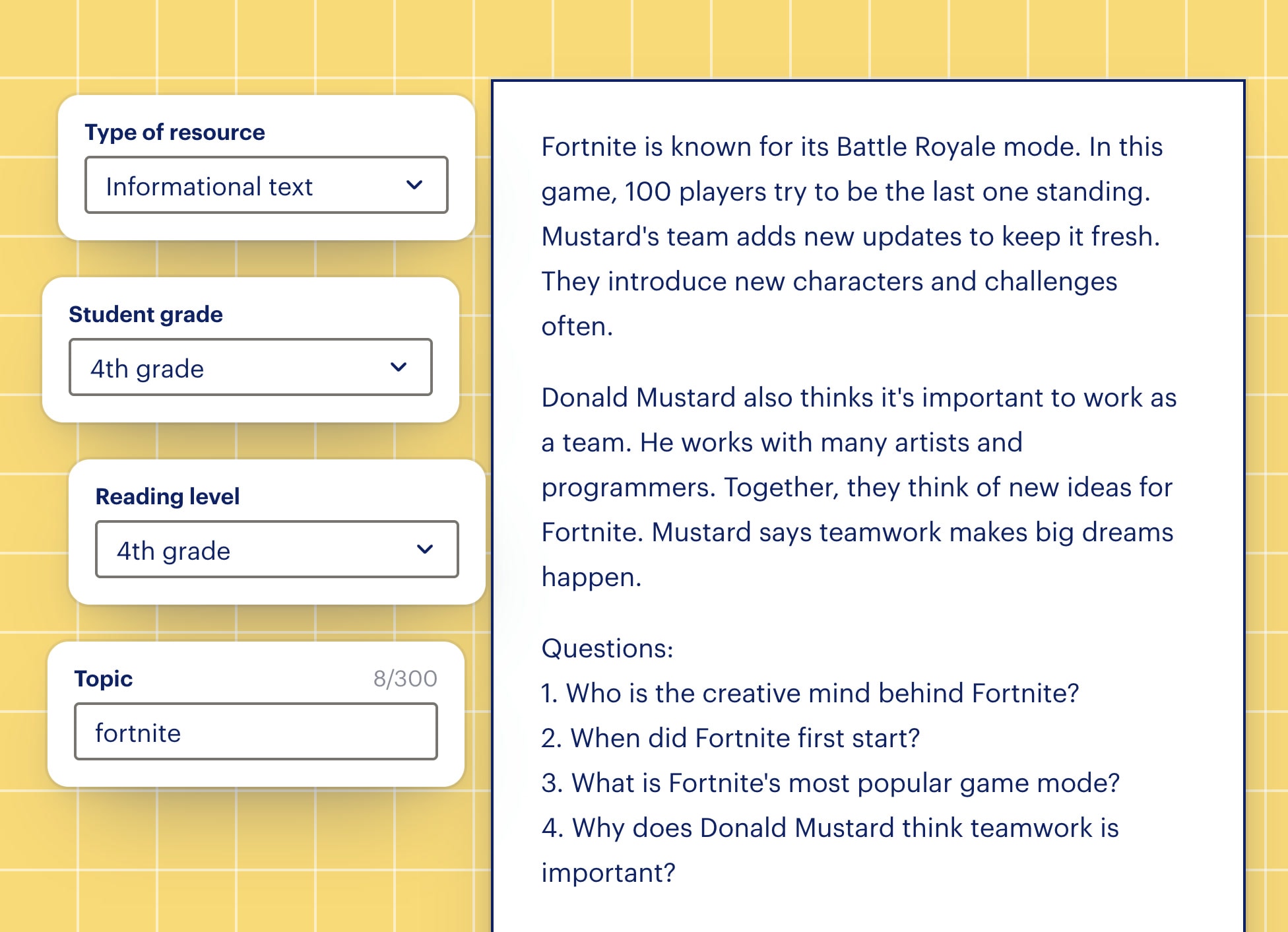
Every field (type of resource, student grade, reading level, topic) was a parameter injected into an OpenAI call, so I designed the input architecture with our data scientist.
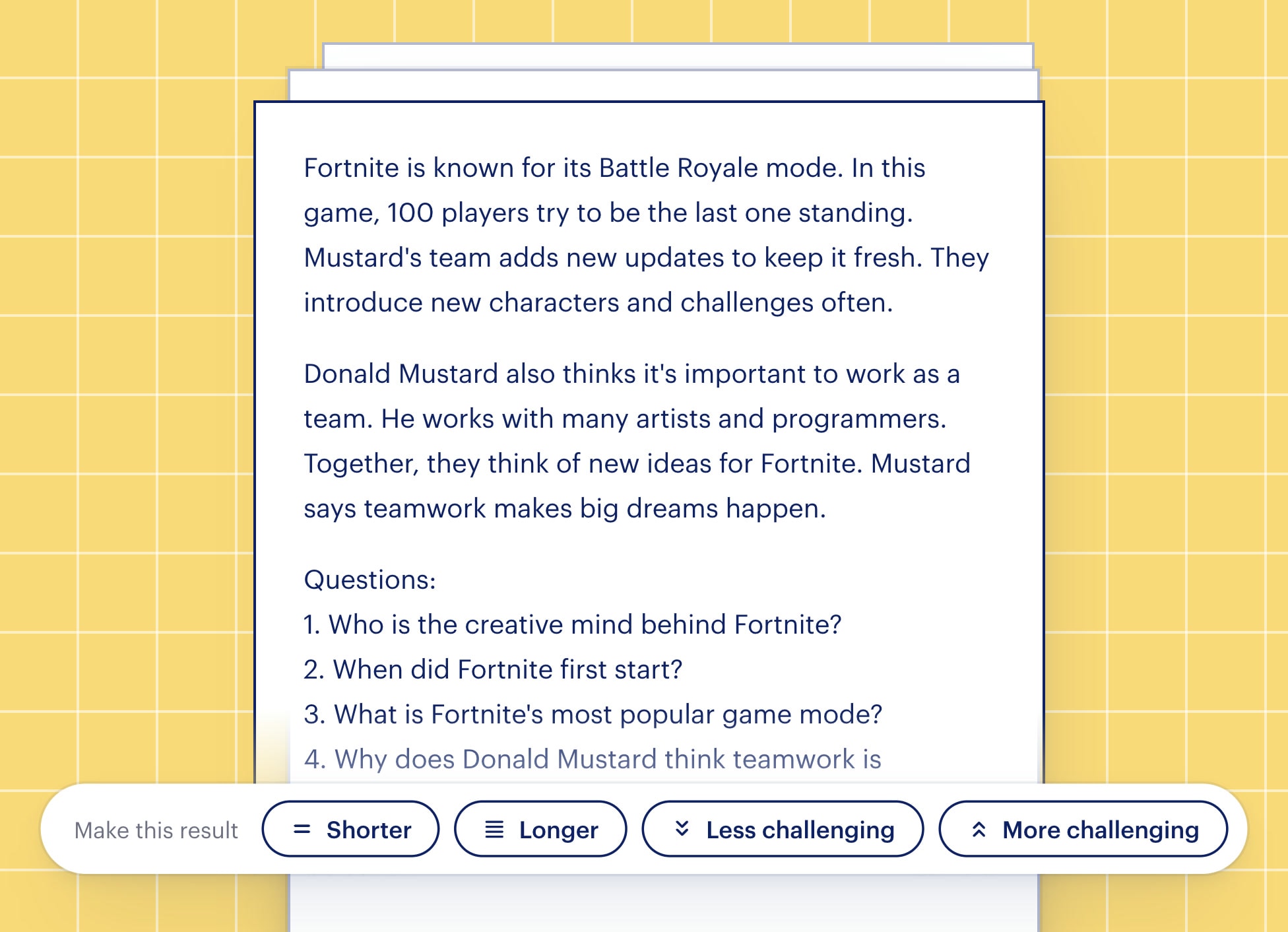
I built modifier buttons (Shorter, Longer, Less Challenging, More Challenging) as additive re-runs, so teachers could tweak a passage without losing the version they'd already spent time on.
Research from two pilots showed teachers wanted to generate materials right away, not browse a strategy library first. We shipped and iterated our way from a strategy-first IA to a materials-first one, which meant getting PM and eng aligned on what the MVP of a standalone flow actually needed.
Solution
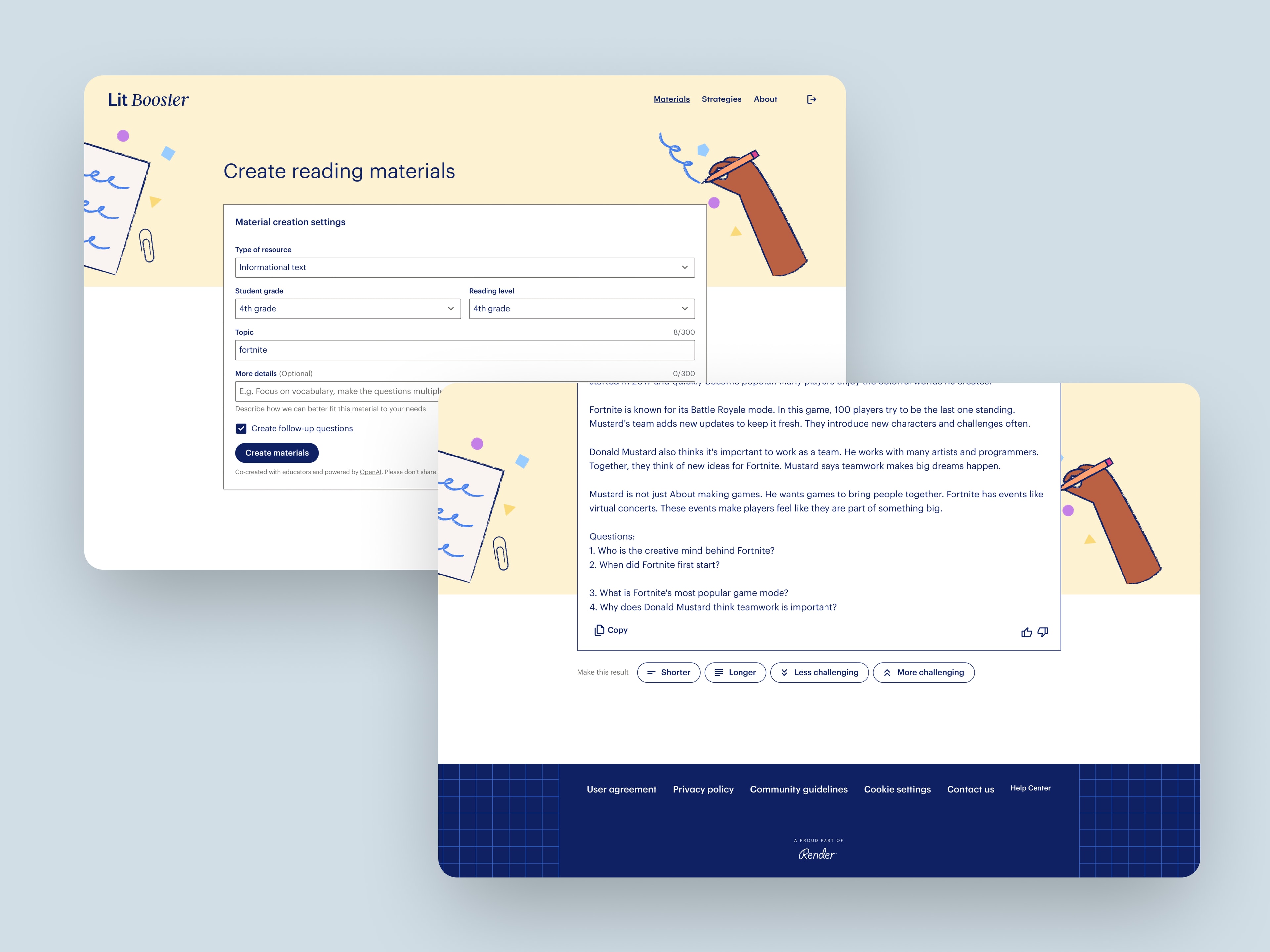
Lit Booster shipped as two tools in one: a library of 20+ evidence-based reading intervention strategies across 5 skill domains, and an AI materials generator that produced practice texts and word lists matched to a student's grade level, reading level, and interests.
A teacher could get a 3rd grade passage about Fortnite in under a minute and refine it with one click. In the final version I split the generator out from the strategy library and made it the front door, since that's how teachers were actually using it.
Impact
Lit Booster didn't survive, but its infrastructure did. The system we built to check its AI outputs became CZI's Evaluators platform.